Things to Do in Rabat
Salt air, stork-topped ruins, and a capital that never learned to rush
Top Things to Do in Rabat
Find activities and tours you'll actually want to do. Book through our partners -- no booking fees.


Plan Your Trip
Essential guides for timing and budgeting
Climate Guide
Best times to visit based on weather and events
View guide →Day Trips
The best excursions and nearby destinations worth the journey
Explore day trips →Where to Stay
Best neighbourhoods, hotel picks, and booking tips
Find hotels →Travel Insurance
What's required, what coverage matters, and how to get a quote
Read guide →What to Pack
Climate-specific gear, essentials, and what to leave at home
See packing list →When Should You Visit Rabat?
Tap a month for weather, crowds, and highlights
View full year-round climate guide →Explore Rabat
Andalusian Gardens
City
Archaeological Museum of Rabat
City
Bab Rouah
City
Bouregreg Marina
City
Chellah Necropolis
City

Hassan Tower
City

Kasbah of the Udayas
City
Mausoleum of Mohammed V
City
Mohammed Vi Museum of Modern and Contemporary Art
City
National Library of the Kingdom of Morocco
City
Rabat Beach
City

Rabat Medina
City
Royal Palace of Rabat
City
Villa des Arts
City
Your Guide to Rabat
About Rabat
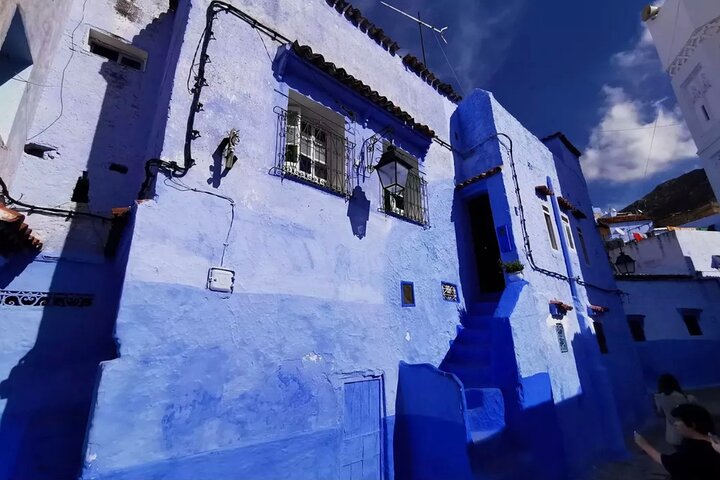
The Bou Regreg river catches late-afternoon light so cleanly that you halt mid-span between Salé and Rabat, certain the city belongs on canvas, not a political map. Morocco's capital wears its crown without the tourist-industrial machinery Marrakech and Fes rev at full throttle. The Kasbah des Oudayas crowns a rocky promontory above the river mouth, lanes painted in the same blue-and-white palette that wins Chefchaouen fame.
Yet here you stroll without elbowing tour groups. Below the walls, Andalusian Gardens cascade in terraced rows of orange trees and bougainvillea toward the Atlantic, salt wind carrying the metallic tang of fishing boats moored along the corniche. The medina, compact enough to cross in twenty minutes, skips the labyrinthine overwhelm of Fes, and that is the entire point.
Rue des Consuls still hosts carpet merchants and leather workshops. But nobody grabs your arm. South of the Ville Nouvelle, where the French colonial grid of Avenue Mohammed V widens into jacaranda-lined boulevards, Chellah waits behind its Marinid gate: a Roman-era necropolis where white storks build enormous nests atop ruined minarets, and the only sound is wind threading fig trees rooted in what was once a forum.
Hassan Tower, that unfinished twelfth-century minaret rising above the esplanade like a sandstone fist, anchors the opposite end of the city with monumental ambition Rabat otherwise keeps quiet. The limitation is nightlife, which shuts down early compared to Casablanca, and beaches, better for surfing than swimming due to strong Atlantic currents. Yet if you want Morocco's texture minus the performance, Rabat delivers.
Travel Tips
Transportation: Rabat's tram, two air-conditioned lines running every few minutes, links the medina, the Ville Nouvelle, and Salé across the river. Buy a rechargeable card at any station kiosk instead of single tickets. The per-ride savings pile up fast. For day trips, ONCF trains leave Rabat Ville station for Casablanca roughly every half hour, under an hour each way; Fes is about two and a half hours. Blue petit taxis circle every intersection and use meters. Yet drivers sometimes forget to start them. Insist before the car moves. The tram does not reach Rabat-Salé airport, so negotiate a taxi fare before getting in, not after.
Money: Morocco runs on the dirham, and Rabat stays cash-first outside hotel lobbies and upscale restaurants in Agdal. ATMs cluster along Avenue Mohammed V and near Bab el Had at the medina entrance, but foreign-card fees add up, so fewer, larger withdrawals save money. Credit cards work at chain shops and sit-down restaurants. The medina, corner cafes, and petit taxis are cash only. Tipping is expected but restrained: round up at cafes, leave roughly ten percent at restaurants. One welcome difference from Marrakech: most Rabat vendors quote fair prices without theatrical haggling, though carpet merchants on Rue des Consuls are the reliable exception.
Cultural Respect: Rabat's university students and government staff give the Ville Nouvelle a cosmopolitan surface. Yet step into the medina or the residential quarters of Hassan and expectations shift. Cover shoulders and knees in traditional neighborhoods and near mosques; a light scarf earns noticeably warmer receptions. During Ramadan, eating, drinking, or smoking in public during daylight hours is considered disrespectful, and most local restaurants close until sunset, though hotel dining rooms stay open. Friday midday prayer empties the streets for about an hour, so plan around it. A greeting in Darija, even just salam, opens conversations that French alone tends to keep formal.
Food Safety: The stalls around the Marché Central, just off Avenue Mohammed V, grill sardines over charcoal until the skin blisters and the flesh turns smoky-soft, served on paper with coarse salt and a wedge of lemon. This is likely the best cheap meal in Morocco's capital. In the medina near Bab el Had, hole-in-the-wall spots serve harira, a thick cumin-and-tomato soup with lentils, available year-round despite its reputation as a Ramadan fast-breaker. Follow the locals: a stall with a queue means fast turnover and fresh food. Skip the tourist restaurants near the kasbah entrance. Ten minutes deeper into the medina, the quality rises and the cost drops.
When to Visit
Rabat's Atlantic position gifts the city a softer climate than inland Morocco. Yet gentle remains relative. Pick the wrong month and you will either soak in rain or wilt under heat fierce enough to clear the medina. March through May is your safest bet. Thermometers hover between 15 to 23 degrees Celsius (59 to 73 Fahrenheit), rainfall tumbles from winter highs, and jacarandas along Avenue Mohammed V explode into purple bloom every April.
The city simply looks sharper in spring than at any other time, and hotel rooms stay generous because most Morocco travelers still race straight to Marrakech.
Summer, June through August, delivers dry heat that spikes around 28 to 32 degrees Celsius (82 to 90 Fahrenheit). The ocean breeze gliding up the Bou Regreg most afternoons keeps Rabat noticeably cooler than Marrakech or Fes on the same day. Aim for June to catch Mawazine Festival, one of Africa's largest music events, which seizes multiple stages across the city for a week.
July and August see Moroccan families pack the beaches at Plage des Nations and Témara, adding buzz yet clogging the corniche. Hotel rates increase during this stretch, and the riads inside the medina can feel suffocating without air conditioning.
September and October are the quiet sweet spot. Temperatures slide back to 20 to 26 degrees Celsius (68 to 79 Fahrenheit), summer crowds evaporate, and accommodation prices dip sharply. Light turns honey-gold earlier each afternoon, and Chellah's ruins photograph better than at any other time of the year.
November through February is Rabat's rainy season, with December and January catching the worst of it. Expect leaden skies and sudden downpours several days a week. Temperatures rarely drop below 8 degrees Celsius (46 Fahrenheit), so it is never cold. Yet the damp Atlantic chill seeps into the medina's stone walls in a way dry cold never does.
Budget travelers find rooms at their cheapest, and tourists vanish almost entirely, giving Rue des Consuls a solitude some travelers crave. Ramadan, shifting roughly eleven days earlier each year, reshapes daily rhythms no matter the season. The city slows by day, then erupts after sunset when families flood the streets and the warm scent of freshly fried chebakia, those sesame-and-honey pastries stacked in golden spirals, drifts from nearly every doorway.
More Ways to Experience Rabat
Tours, day trips, and local experiences curated by on-the-ground operators.
Didn't see anything interesting yet?
Browse Viator's full catalog of tours, day trips, food experiences, and private guides in Rabat.
See All Rabat Tours on Viator